Showing posts with label Diagnosis. Show all posts

Thursday, 12 August 2021

Post #183 - End of the line - so long and thanks for all of the fish (although I don't like eating fish ...)

This is my last post. For reasons that I am not prepared to divulge I no longer wish to identify as autistic. Henceforth I shall be merely geeky.  I am, of course, autistic in the medical sense, but I wish to try and recapture a flavour of my pre-autism days.  I'll also be fully supporting Master Logic who needs all of the help he can get in working through his difficult teenage years.  

The period between December 2013 (the fight with over another parent over filming with an iPad at Master Logic's primary school) through to my two formal diagnoses - the brief, but powerful NHS one undertaken by the excellent Dr Elizabeth Kilbey via Oxleas in April 2015 and the private one funded via the civil service and undertaken by Dr Ken Greaves in May 2015 have been an enlightening read.  That said, until December 2013 I knew that something was wrong, but not enough to re-assess my entire life about. Hindsight's an amazing thing, but I'd like to try and be less autistic if I possibly can?  

I've gone full cycle - it's August 2021 now and I'm a proud mum on the spectrum and a geekess; I'm happy with that.  I cannot mix with certain adults on the spectrum, but some are absolutely lovely and I am hoping to keep in contact with them.

It's been emotional - farewell and thank you for reading.


Thursday, 24 September 2015

Post #9 - Work Diversity Blog


This is a redacted version of a blog post I wrote for my employer's Diversity and Inclusion Campaign 2015:

*Edit* - I'm pretty sure that it never went out as I became too ill to participate in the campaign.  


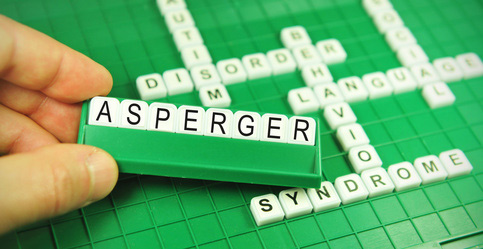
Diversity Blog – Asperger Syndrome

I have been employed within the public sector for the last twenty-one years. My son had an early diagnosis of being on the Autistic Spectrum and then an additional assessment also noted he had Attention Deficit Hyperactivity Disorder (ADHD).  Having seen his traits it finally dawned on me that maybe I was also on the Autistic Spectrum?  As time went on, I was inspired to seek my own formal medical diagnosis, obtained via the Occupational Health team earlier this year.

The support available to staff who have disabilities and long term health conditions and who are employed here is great. By attending the various internal support groups I have learnt so much more about all things disability now than I did, a year ago and my knowledge is increasing.  I enjoy taking a positive and proactive stance to ensure that the rights of disabled staff are respected as much as possible.  As well as the main network there are a number of sub-groups supporting specific communities, such as the Asperger Syndrome Group, which I chair and the associated Parents/Carers of Children with Autism, chaired a colleague.  In addition to this, as well as support for many other disabilities, there’s the Mental Health Group.  Depression often occurs alongside autism, because the brain struggles to process the world around you.  I had struggled in the past and the support I have received here from colleagues has been essential to my wellbeing.

Generally, we do a great job of supporting disabled staff, however, in my opinion, there is still room for improvement and quite a lot can still be done to make our workplace more disability accessible, both in terms of the awareness and understanding that colleagues have of the impacts of disabilities and long term health conditions on colleagues. For example, if you have autism, you can find it even more difficult to fully understand the unwritten rules of the workplace.  We often struggle to interpret the unwritten rules of the office and sometimes miss the point of what we are being told.

Whilst the term Asperger Syndrome no longer formally exists as a medical diagnosis, it provides those of us at work with a good terms of reference.  I particularly like the term ‘Aspie’ and I’ve written the first draft of An Aspie’s Guide To Social Media and am planning other additions to the list such as An Aspie’s Guide To Work and An Aspie’s Guide to Travel.  If my work helps other people in similar situations then I’m happy.  I’ve also made some great friends through the support network and as a result, will be getting more involved with volunteering for the National Autistic Society (NAS).

Sunday, 16 August 2015

Post #2 - When You Know Something's Wrong, But You Cannot Prove It

Following on from my initial chat with the GP, I waited about four months to have a pre-assessment session with my local Mental Health Team.  This took place on a Thursday morning in the same satellite hospital my son was diagnosed in.  It was basically me, my husband and a social worker who had a series of set questions to ask me.  I'll admit it, I became very emotional throughout, especially when probed about my past history.  The concluding part was to complete the AQ test, you know, this one: http://aspergerstest.net/aq-test/  I scored within the clinical range for ASD and was referred on towards a full diagnosis.  I was informed that adult aspies don't really have any support available and that it would take absolutely ages.  Fair enough, this is the NHS, they are overburdened to say the least.

Image result for aq test

My mental health suffered during the months which followed.  I told my brusque boss, who couldn't have given a flying fig about autism and thought that it was just an excuse for me to slack off.  I walked out of my job with stress, I couldn't stop crying - I'd had enough.  My GP was sympathetic and I was prescribed antidepressants - Setraline to be precise.  At home I recuperated, often walking around the garden listening to Radio 4's Desert Island Discs on podcast to block out any extraneous noise - Aspies hate such things.  On the advice of the GP I self-referred for Cognitive Behaviour Therapy (CBT) and had an introductory session.  It was interesting, but a whole load of the other delegates were mute and the others, well without breaking confidences, one was very aggressive towards me indeed when I posed a question about women feeling more guilt than men tend to.  Nice.

I returned to work a few weeks later, initially once a week.  Things were fine at first, but once I upped my hours once more, it began to slide.  The same problems arose: my performance was criticised and my self-esteem was at an all time low.  I walked out of the job once again a few months later, I'd had enough, I wanted to leave, permanently.  The GP signed me off once more and I was referred for counselling via the work programme.  I fell out with the first counsellor, some things just don't click.